
Skin (Skin) Cancer
Safe surgical solutions for your health with accurate diagnosis, safe intervention! NY Health is always ready with its professional team.
- Liver Cancer
- Lymphoma Cancer
- Leukemia
- Bladder Cancer
- Stomach Cancer
- Myelofibrosis
- Multiple Myeloma
- Nasopharyngeal Cancer
- Esophageal Cancer
- Pancreatic Cancer
- Penis Cancer
- Prostate Cancer
- Uterine Cancer
- Testicular Cancer
- Thymoma Tumor
- Thyroid Cancer
- Urethna Cancer
- Mouth Cancer
- Lung Cancer
- Bowel (Colon) Cancer
- Kidney Cancer
- Skin Cancer
- Tongue Cancer
- Early Stage Breast Cancer
- Larynx Cancer
More information
Feel free to contact us for more information or support with your questions. We will be happy to help you.
Get in touch!Customer Service
+90 532 100 66 78
NY Health
SKIN CANCER
Skin (Skin) Cancer
Take changes in your skin seriously - early diagnosis saves lives
Skin cancer is caused by abnormal proliferation of skin cells and is the most common cancer worldwide. is a type of cancer. Although it is usually seen in areas exposed to sunlight, it can also affect can develop in any part of the body. Cases of skin cancer diagnosed at an early stage are largely can be successfully treated.
Kidney Cancer Symptoms
Blood in the urine (painless hematuria)
Persistent pain in the lower back or flank area
Sensation of a mass on the side of the abdomen
Unexplained weight loss
Constant weakness and fatigue
Fever (without infection)
High blood pressure or anemia
Note: Many patients can be diagnosed by routine ultrasound or CT scan alone without experiencing any symptoms.
Types of Skin Cancer
Basal Cell Carcinoma (BCC)
It is the most common type. It grows slowly, rarely metastasizes. Frequent in sun exposed areas (face, neck) is seen.
Squamous Cell Carcinoma (SCC)
It is more aggressive and can rarely spread to other organs. Usually red, crusted manifested by lesions.
Melanoma
It is the most dangerous type. It can spread faster than other skin cancers. If not diagnosed at an early stage life-threatening.
Symptoms
Moles that change shape, color or size
Wounds or scabs on the skin that do not heal
Asymmetric, multicolored lesions with irregular edges
Sudden bleeding, itching or flaking of the skin
New or rapidly growing audiences
Follow the moles with the ABCDE rule :
A: Asymmetry | B: Border irregularity | C: Color difference | D: Diameter > 6 mm | E: Change (outlook/
change over time)
Risk Factors
Prolonged sun exposure (especially in childhood)
Fair skin, light eyes and hair
Family history of skin cancer
Solarium use
Weak immune system
Multiple moles (nevi)
Diagnosis Process
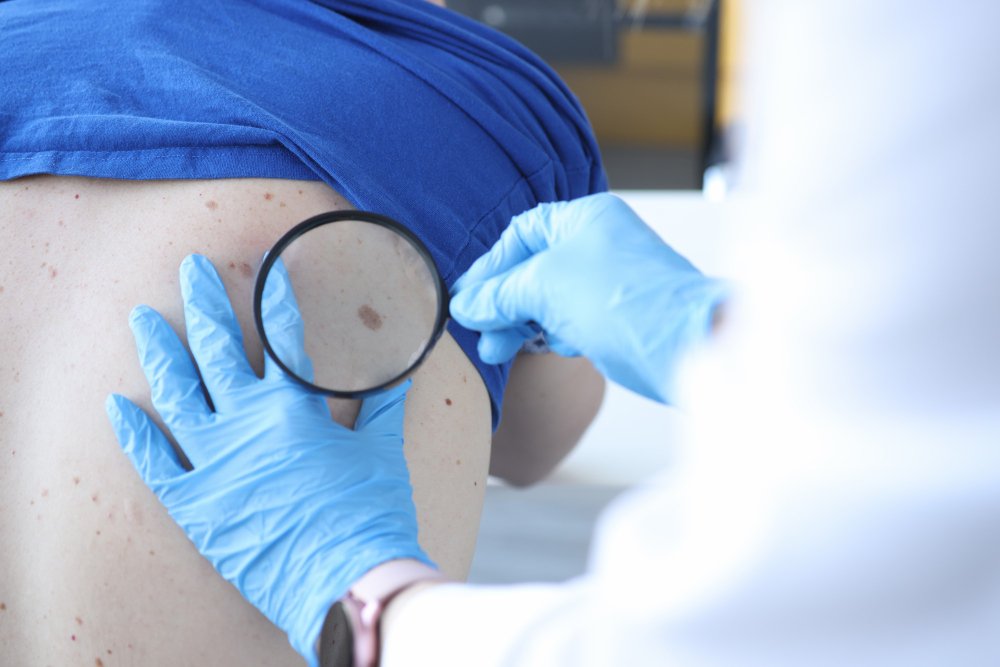
Dermatological examination
Dermatoscopic examination
Biopsy of suspicious lesions
Pathology evaluation
PET-CT investigation of invasion in melanoma cases
Treatment Methods
Surgical Excision
Removal of the tumor with clean margins. It is the most common and most effective method.
Mohs Microsurgery
It is a method of removing cancerous cells with maximum tissue preservation, especially in aesthetically important areas such as the face. removal.
Radiotherapy / Chemotherapy
It is used in advanced stages or in cases not suitable for surgery.
Immunotherapy and Targeted Therapies
Advanced treatment methods that activate the immune system in aggressive skin cancers such as melanoma.
Treatment Process Suitable for Health Tourism Treatment Process Suitable for Health Tourism
- - Preliminary evaluation of skin lesion photographs and/or pathology reports
- - Diagnostic confirmation and second opinion service if necessary
- - Planning the necessary surgical procedure (with aesthetic precision)
- - Accommodation, transfer, escort support
- - Remote monitoring and wound care coordination
A small change in your skin can be a big step.
You can contact us for detailed information about skin cancer or to start your diagnosis process.